Good car park line marking turns a busy site into a safer, calmer and more efficient space. The right plan manages traffic flow, protects pedestrians, maximises capacity, meets accessibility needs and stays legible over time. This guide sets out a practical approach for commercial sites in Southampton, covering layout, bay design, materials, symbols and maintenance so your markings work as a single, safe system rather than a set of isolated lines.
What an efficient Southampton car park needs
Start with outcomes. A well-planned layout should move vehicles predictably, give pedestrians protected routes, make bays easy to find and use, and support clear decision-making at every junction. On commercial sites, that usually means defined entry and exit points, one-way systems where space is tight, generous turning radii for vans, good sightlines near crossings and reserved areas for service access. The markings, signs and kerb lines must support each other, not compete. Keep conflict points to a minimum, then mark them clearly so users understand priorities at a glance.
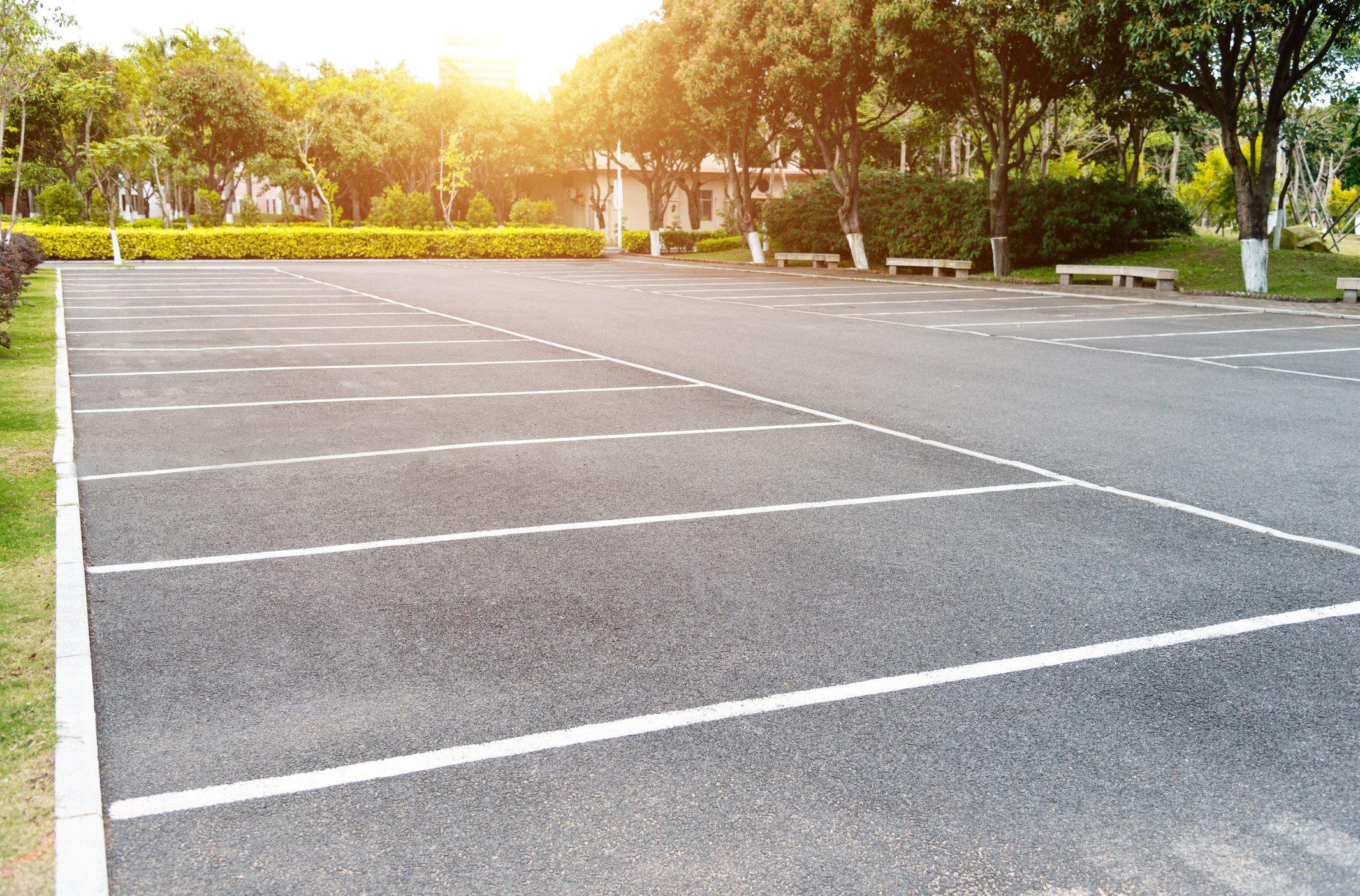
Map traffic flow before you paint
Flow planning comes first. Sketch how vehicles enter, queue, circulate and leave. If congestion builds at pay machines or barriers, add holding space and directional arrows to prevent blocking. Use one-way loops to eliminate head-on conflicts, then reinforce them with arrows and provide give-way lines at re-entry points. Position speed roundels before crossings and building doors, not after them. Where loading occurs during trading hours, mark dedicated service lanes and time-restricted bays so that deliveries do not disrupt general circulation. Test turning circles for the largest regular vehicle and widen corners or set back bays where clipping is likely.
Design parking bays for real users
Capacity matters, but usability and compliance come first. Provide a mix of bay types sized and placed for the people who will use them most often.
- Standard bays sized to your vehicle mix, with wider aisles where turnover is high
- Accessible bays to current guidance with transfer space and access to dropped kerbs
- Parent and child bays near entrances with extra side clearance
- EV charging bays with feeder pillar protection and cable management
- Loading, click and collect or short stay bays close to the door but outside pedestrian paths
Group similar bays so drivers do not hunt across the site. Keep accessible and parent bays on the natural pedestrian desire line, and connect them to footways without forcing users into live traffic.
Pedestrian safety and accessibility integrated
Plan people first, then fit cars around them. Mark continuous pedestrian routes from the outer edge of the site to each entrance with zebra-style crossings or high-visibility ladder markings where they cross traffic. Add hazard hatching around entrance doors to prevent vehicles from nosing into the walking zone. Use tactile paving and clear visual contrast where footways drop to carriageway level. Keep sightlines open by setting crossings away from walls and planting. If forklifts or service vehicles share space with the public, use bold-coloured walkways and give-way bars to make priority unambiguous. Maintain a consistent hierarchy so the same marking style always signals the same rule.
Materials and surfaces that last
Southampton sites see varied traffic and coastal weather, so material choice affects life and safety. Thermoplastic is the go-to for durability on tarmac, coping well with high traffic and offering fast cure times. High-build cold plastic or MMA can be used for heavy-duty areas and high-visibility symbols. Acrylic and chlorinated rubber paints suit light-duty or indoor settings. Whatever you choose, performance depends on preparation. Clean, dry, sound surfaces give the longest life. On polished or low-texture asphalt and older concrete, a primer or light road surface retexturing can improve bond and visibility. Where slip resistance is critical, add anti-skid aggregates to crossings and pedestrian zones so contrast does not come at the cost of grip. For an overview of materials and applications across various surfaces, see our line-marking services.
Markings that guide behaviour: arrows, symbols and wording
Lines set the framework, while arrows, roundels and symbols tell users exactly what to do next. Directional arrows, give way triangles, speed numerals, and stop lines create a predictable sequence of decisions. EV, motorcycle and accessible logos reduce hesitation at the bay. Numbering and zone letters help drivers and facilities teams locate vehicles quickly. Keep wording short, uppercase and consistent, for example, “KEEP CLEAR” and “NO ENTRY”. Use contrast smartly, reserving bold colour for the places where you most need attention, so important messages do not get lost in visual noise. Space symbols so they read at driving speed, not just when standing over them.
Logos and arrows in car park markings
Branded logos, coloured zones and prominent arrows can be added as preformed thermoplastic shapes or applied in durable resins. They improve wayfinding and reinforce brand experience when used sparingly. Place logos outside primary safety markings so branding never reduces the legibility of crossings, give-way lines, or speed information. For durability, specify skid-resistant infill and edge sealing where heavy turning or frequent sweeping occurs.
Maintenance and futureproofing across the site
Markings fade gradually, so plan inspection and refresh cycles alongside surface maintenance. Heavy wear areas such as turning points, crossings and barrier queues often need earlier re-marking than static bays. Build a simple audit, noting retroreflectivity and contrast, then prioritise safety-critical symbols first. Future needs matter too. Leave cable routes and power capacity for more EV chargers, and reserve space to convert standard bays if uptake grows. If usage patterns change, do not just repaint like-for-like. Remove redundant lines cleanly and adjust the layout to new demand, then re-mark so the plan still reads as a coherent system.
Common planning mistakes to avoid
- Squeezing aisle widths so bays look full on paper but fail in practice
- Placing pedestrian crossings where sightlines are blocked by walls or parked vans
- Mixing marking styles so users cannot tell priorities at a glance
- Overusing coloured areas until no single cue stands out
- Painting before fixing surface defects, leading to rapid failure
Providers of car park line marking in Southampton
Specialist contractors provide planning advice as well as application services. For local expertise, see our dedicated page for Southampton line-marking services, which outlines our capabilities across car parks, roads and commercial sites. A short site review, followed by a clear plan, will usually save time, reduce the need for repainting later, and improve day-one safety for staff and visitors.

Compliance, visibility and coordination with signs
Road traffic markings, workplace safety guidance and accessibility standards set the boundaries your plan should meet. Align bay sizes, transfer zones and route widths with current UK guidance, then check that vertical signs and kerb lines match the instructions on the ground. Markings cannot solve poor lighting, so coordinate with luminaires to keep crossings and decision points bright after dark. Consider how winter conditions affect contrast. High build materials and correct colour choices maintain legibility in rain, while anti-skid aggregates sustain grip where pedestrians and vehicles mix.
Phasing work on live commercial sites
Most sites cannot fully close. Sequence marking in zones, keep fire routes open and provide temporary cones or tape where instructions are out of service during curing. Communicate the plan to staff and tenants in advance so drivers do not follow outdated markings. Where layouts change, remove or mask obsolete lines before opening the new route. The goal is simple, unambiguous instruction at every stage, even if the project spans several nights.
Custom logos and directional arrows
Custom symbols, brand marks and bold directional arrows are available as preformed thermoplastic or bespoke stencils, installed to match your colour palette and site materials. A specialist will advise on sizing for legibility at driving speed, placement to avoid tyre scuffing and the right skid-resistant finish for pedestrian areas. Keep designs simple. Strong contrast and clear shapes outlast trend colours and remain readable when traffic and weather take their toll.
Plan your next step
If you are reviewing a commercial site in Southampton, start with a sketch of flows, list the bay types you truly need and walk the pedestrian routes. Then bring a contractor in to validate the design on-site, confirm materials, and plan phasing. For a structured discussion and local delivery, review the details on our Southampton line marking page and arrange a site visit when you are ready.
Frequently Asked Questions:
Do you provide car park line marking across Southampton and nearby areas?
Yes. We plan and deliver car park line marking across Southampton and surrounding towns, with options for night, weekend or phased working to minimise disruption on live sites.
Which materials are best for busy commercial car parks?
Thermoplastic is the usual choice for tarmac due to its durability and fast return to service. MMA or other high-build cold plastics are well-suited to heavy-duty areas and high-visibility symbols. Acrylic paints are appropriate for indoor use or light-duty zones. The right pick depends on surface, traffic and visibility needs.
Can you phase works so the car park stays open?
Yes. We typically split sites into zones, maintain fire routes, cone or tape off curing areas and remove or mask obsolete lines before opening new routes. Clear comms and signage keep operations running while work progresses.
How long before traffic can use the new markings?
It varies by material and weather. Thermoplastic usually cools within minutes and can reopen shortly after application. Many cold plastic systems are traffic-ready in 30 to 60 minutes. Conventional paints can take 1 to 2 hours or longer in cool, damp conditions.
Can you help with layout planning and bay counts before painting?
Yes. We support flow sketches, bay mix and placement, sightlines, turning checks for the largest vehicles and safe pedestrian routes. To speed things up, it helps if you can share a site plan, photos, peak traffic patterns and any access or delivery constraints.